

Roby Robertson- Hundreds Helped and Served
Showing posts with label clemmons NC clemmons real estate. Show all posts
Showing posts with label clemmons NC clemmons real estate. Show all posts
Wednesday, April 23, 2025
Winston Salem | What is going Rate for Property Management Fees?

Monday, October 30, 2023
5 Things You Should Not Put in Your Dishwasher
Information courtesy of a great Company. Maids.com
Washing dishes is a real pain, which is why automatic dishwashers are one of the most helpful kitchen appliances. If you read our blog, you know your dishwasher can clean much more than dishes, pots, and pans. From sanitizing baby toys to cleaning light fixtures, a dishwasher gets the job done and may leave you asking, “What is not dishwasher safe?” But have you ever thought about what not to put in a dishwasher? Unfortunately, your favorite multi-tasking kitchen appliance can only do so much, so we’ve compiled a list of things to definitely put on the “hand-wash only” list in your home below.
What Shouldn't You Put In the Dishwasher?
Acrylic Or Plastic Dishes
Knives And Other Sharp-Edged Tools
Cast Iron, Carbon Steel, And Nonstick Cookware
Delicate Glassware And Fine China
Wooden Spoons, Bowls, And Cutting Boards
Save on Maintenance by Caring and Cleaning Your Dishwasher
If you've been washing some of these items in your dishwasher for years, it's not too late to change your ways to spare your dishes (and appliance) any further damage! You can still keep your finest dishes and best kitchen utensils clean, and you'll help them look, last, and perform their best. Regularly cleaning your dishwasher and following the manufacturer's best practices should give you years of service. Not only will a well-maintained dishwasher churn out clean dishes day after day, but it can also help you with other household cleaning. And if your dishwasher features a sanitizing setting, it makes for a pretty handy disinfecting tool.Thursday, May 18, 2023
Disclosure when selling Your Home! Winston Salem
The NC Real Estate Commission analyzed all of the disciplinary cases published in the eBulletin for 2020-2021, to determine the most common violations under License Law and Commission rules. Although the Commission does not have formal categories for cases, some cases fall into more than one category which results in brokers having multiple rule violations 47% of all violations were related to disclosure of material facts. These can result in disciplinary action and/or civil litigation for both agents and clients! Below is from a recent discussion in continuing education
“See No Evil, Say No Evil” (see note at end)
Jake, A broker with A+ Realty, meets with Peter, a property owner, to provide a listing presentation. During the meeting, Peter says that he recently had a home inspection that indicated water leakage in the basement walls and crawl space, but that he has ordered no further inspections to verify the issue or determine repair needs. Jake tours the property and observes no moisture or standing water. Peter decides to list the property with Jake. On the Residential Property and Owners’ Association Disclosure Statement, RPOADS, Peter selects “No Representation” to all of the questions. Throughout the listing period, there is no visible evidence of moisture or water, so Jake does not mention Peter’s inspection report to any of the prospective buyers.
1. Did Jake fulfill his duties as a broker? YES/NO Answer: No. 2. Why or Why not?
The answer is NO!
a) Although Jake did not personally observe any moisture or standing water, he still had an obligation to disclose the water leakage in the basement walls and crawl space.
b) Because Jake has an obligation to disclose whether he personally saw any water or not.
c) Because the owner, Peter, already checked “No Representation” on the RPOADS.
d) Because Peter’s completion of the RPOADS relieved Jake of any additional disclosure obligations<
Note: In my past experience, it was felt that an issue already repaired does not have to be disclosed. However, we learned that it is best to disclose this. Some sellers will not want to disclose as they feel it will hinder the sale. However, we believe it shows good faith and also protects listing agents (me) and my clients from any future litigation. It is up to the buyer's agent to protect his/her client by getting the repair inspected. I sure would!
Thinking of selling? Visit. www.RobyRobertson.com
Sunday, March 13, 2022
Winston Salem | How To Navigate a Market Where Multiple Offers Is the New Normal
Carolina Living Real Estate has the Know How to Help!

If you’re thinking of buying a home today, you already know that the number of homes available for sale is low. But what does that really mean for you? As a buyer, low housing supply coupled with high buyer demand means you should be prepared to navigate a highly competitive market where homes sell fast and get multiple offers. Realtor.com has this to say:
“Homes also flew off the market at record pace as buyers put offers in the moment properties came up for sale….”
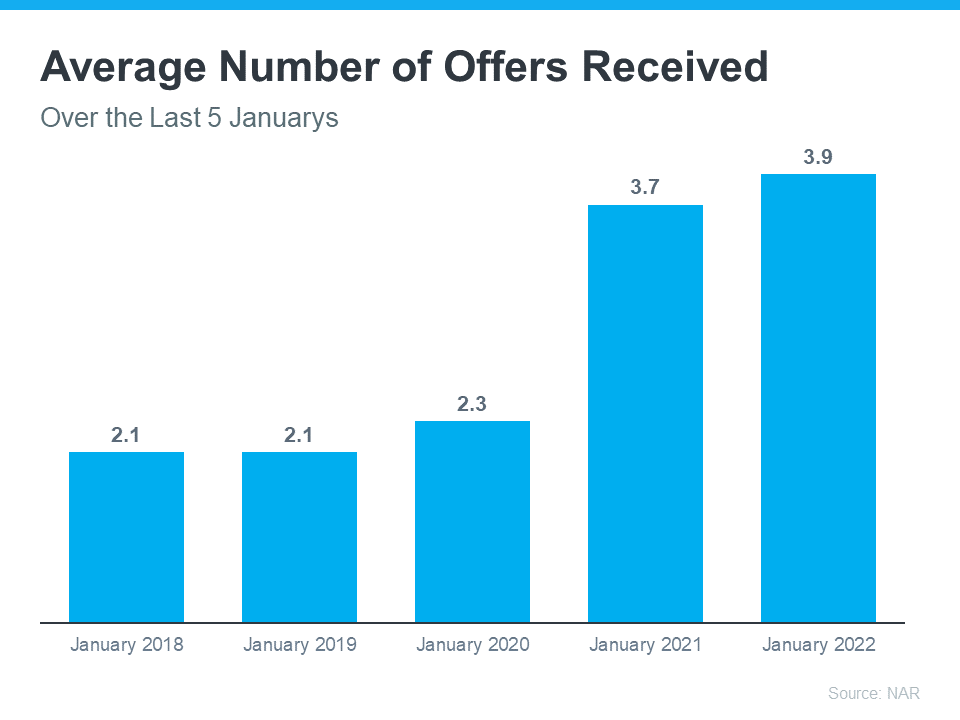
In a bidding war situation like this, doing everything you can to get ahead of the competition is a wise move. That’s because when you find a house and submit an offer, it’ll likely be up against strong offers from other buyers. According to the latest Realtors Confidence Index from the National Association of Realtors (NAR), homes today are receiving an average of 3.9 offers. That’s the most offers we’ve seen in January for the last 5 years (see graph below):
To help you navigate bidding wars with multiple offers, an expert real estate advisor is key. They know what’s worked for other buyers, what sellers are looking for, and how to help you prepare when it comes time to make an offer. Here are three tips to keep in mind that will help you make the best offer possible.
1. Know Your Numbers
Knowing your budget and what you can afford is critical to your success as a homebuyer. The best way to understand your numbers is to work with a lender so you can get pre-approved for a loan. Pre-approval shows sellers you’re serious, which can give you a competitive edge. You should also know making an offer at the home’s asking price may not be enough. Homes today often sell for more than their listing price. An agent can help you understand the market value of the home and what other homes are selling for in your area.
2. Be Ready To Move Fast
Speed and the pace of sales are contributing factors to today’s competitive housing market. When homes are selling fast, it’s important to stay on top of the market and be ready to move quickly. Your agent will help you stay up to date on the latest listings and help you put together your best offer as soon as you find the home you want to buy.
3. Make a Strong but Fair Offer
When you’re up against other offers, putting your best offer forward from the start is key. Lean on your agent to write a strong offer and use their expertise on which levers you can pull to make your offer as enticing as possible. One option is to wave some of your contract contingencies (conditions you set that the seller must meet for the purchase to be finalized). Just remember there are certain contingencies you don’t want to give up, like the home inspection.
Bottom Line
No matter what, your agent is your best resource for making an offer that stands out in a competitive market. Let’s connect to talk through what you can expect as a buyer and how to kick off a successful home search.
Monday, June 28, 2021
Winston Salem | Save Time and Effort by Selling with an Agent
With Carolina Living Never Pay 6% to list your home!

Selling a house is a time-consuming process – especially if you decide to do it on your own, known as a For Sale By Owner (FSBO). From conducting market research to reviewing legal documents, handling negotiations, and more, it’s an involved and highly detailed process that requires a lot of expertise to navigate effectively. That’s one of the reasons why the percentage of people selling their own house has declined from 19% to 8% (See graph below): To help you understand just how much time and effort it takes to sell on your own, here’s a look at a few of the things you need to think about before putting that “For Sale” sign up in your yard.
1. Making a Good First Impression
While it may sound simple, there are a lot of proven best practices to consider when prepping a house for sale.
- Do you need to take down your personal art?
- What’s the right amount of landscaping to boost your curb appeal?
- What wall colors are most appealing to buyers?
If you do this work on your own, you may invest capital and many hours into the wrong things. Your time is money – don’t waste it. An agent can help steer you in the right direction based on current market conditions to save you time and effort. Since we’re in a hot sellers' market, you don’t want to delay listing your house by focusing on things that won’t change your bottom line. These market conditions may not last, so lean on an agent to capitalize on today's low inventory while you can.
2. Pricing It Right
Real estate professionals have mission-critical information on what sells and how to maximize your profit. They’re experienced when it comes to looking at recent comparable homes that have sold in your area and understanding what price is right for your neighborhood. They use that data to price your house appropriately, maximizing your return.
In a FSBO, you’re operating without this expertise, so you’ll have to do your own homework on how to set a price that’s appropriate for your area and the condition of your home. Even with your own research, you may not find the most up-to-date information and could risk setting a price that’s inaccurate or unrealistic. If you price your house too high, you could turn buyers away before they’re even in the front door, or run into problems when it comes time for the appraisal.
3. Maximizing Your Buyer Pool (and Profit)
Contrary to popular belief, FSBOs may actually net less profit than sellers who use an agent. One of the factors that can drive profit up is effective exposure. Simply put, real estate professionals can get your house in front of more buyers via their social media followers, agency resources, and proven sales strategies. The more buyers that view a home, the more likely a bidding war becomes. According to the National Association of Realtors (NAR), the average house for sale today gets 5 offers. Using an agent to boost your exposure may help boost your sale price too.
4. Navigating Negotiations
When it comes to selling your house as a FSBO, you’ll have to handle all of the negotiations. Here are just a few of the people you’ll work with:
- The buyer, who wants the best deal possible
- The buyer’s agent, who will use their expertise to advocate for the buyer
- The inspection company, which works for the buyer and will almost always find concerns with the house
- The appraiser, who assesses the property’s value to protect the lender
As part of their training, agents are taught how to negotiate every aspect of the real estate transaction and how to mediate potential snags that may pop up. When appraisals come in low and in countless other situations, they know what levers to pull, how to address the buyer and seller emotions that come with it, and when to ask for second opinions. Navigating all of this on your own takes time –a lot of it.
5. Juggling Legal Documentation
Speaking of time, consider how much free time you have to review the fine print. Just in terms of documentation, more disclosures and regulations are now mandatory. That means the stack of legal documents you need to handle as the seller is growing. It can be hard to know and truly understand all the terms and requirements. Instead of going at it alone, use an agent as your shield and advisor to help you avoid potential legal missteps.
Bottom Line
Selling your house on your own is a lot of responsibility. It’s time consuming and requires an immense amount of effort and expertise. Before you decide to sell your house yourself, let’s discuss your options so we can make sure you get the most out of the sale.
Wednesday, May 19, 2021
Just SOLD 1779 Havenbrook Dr. Clemmons NC
Another Satisfied Customer of Carolina Living Real Estate - Winston Salem Office

Listed $335,000
Sold $335,000
We saved this client $$. Ask us how and we can save you money too!
Thursday, April 8, 2021
Homeownership Is Full of Financial Benefits
Carolina Living Real Estate and Roby Robertson believes every family should feel confident when buying and selling a home.

A Fannie Mae survey recently revealed some of the most highly-rated benefits of homeownership, which continue to be key drivers in today’s power-packed housing market. Here are the top four financial benefits of owning a home according to consumer respondents:
- 88% - a better chance of saving for retirement
- 87% - the best investment plan
- 85% - the chance to be better off financially
- 85% - the chance to build up wealth
Additional financial advantages of homeownership included in the survey are having the best overall tax situation and being able to live within your budget.
Does homeownership actually give you a better chance to build wealth?
No one can question a person’s unique feelings about the importance of homeownership. However, it’s fair to ask if the numbers justify homeownership as a financial asset.
Last fall, the Federal Reserve released the Survey of Consumer Finances, a report done every three years, with the latest edition covering through 2019. Their findings confirmed that homeownership is a clear financial benefit. The survey found that homeowners have forty times higher net worth than renters ($255,000 for homeowners compared to $6,300 for renters).
The difference in net worth between homeowners and renters has continued to grow. Here’s a graph showing the results of the last four Fed surveys: The above graph only includes data through 2019, but according to CoreLogic, the equity held by homeowners grew by $26,300 over the last twelve months alone. That means the gap between the net worth of homeowners and renters has probably widened even further over the last year.
Some might argue the difference in net worth may be due to homeowners normally having larger incomes than renters and therefore the ability to save more money. However, a study by First American shows homeowners have greater net worth than renters regardless of their income level. Here are the findings: Others may think homeowners are older and that’s why they have a greater net worth. However, a Joint Center for Housing Studies of Harvard University report on homeowners and renters over the age of 65 reveals:
“The ability to build equity puts homeowners far ahead of renters in terms of household wealth…the median owner age 65 and over had home equity of $143,500 and net wealth of $319,200. By comparison, the net wealth of the same-age renter was just $6,700.”
Homeowners 65 and older have 47.6 times greater net worth than renters.
Bottom Line
The idea of homeownership as a direct way to build your net worth has met the test of time. Let’s connect if you’re ready to take steps toward becoming a homeowner.
Saturday, February 27, 2021
Winston Salem - It’s a Sellers’ Market
Never Pay 6% To Sell Your Home Again! Carolina Living Real Estate is Professional, Knowledgably, Experienced and Saves You Money!

Some Highlights
- Over the past year, homeowners have gained an unprecedented opportunity to sell with great success while buyer demand is soaring.
- With homes selling twice as fast as they did last year at this time, getting multiple offers, and rising in price, homeowners are in the driver’s seat.
- Let’s connect today if you’re ready to learn about the leverage you have as a seller in today’s housing market.
Monday, February 8, 2021
Winston Salem - Selling Your Home

Thursday, January 14, 2021
4 Reasons People Are Buying Wintston Salem Area Homes in 2021
Call us for Patient and Professional Representation!

According to many experts, the real estate market is expected to continue growing in 2021, and it’s largely driven by the lasting impact the pandemic is having on our lifestyles. As many of us spend extra time at home, we’re reevaluating what “home” means and what we may need in one going forward.
Here are 4 reasons people are reconsidering where they live and why they’re expecting to buy a home this year.
1. Record-Low Mortgage Interest Rates
In 2020, the average interest rate for a 30-year fixed mortgage hit a record low 16 times, continuing to fall further below 3%. According to Freddie Mac, the average 30-year fixed interest rate today is 2.65%. Many wonder how low these rates will go and how long they’ll last. Len Keifer, Deputy Chief Economist for Freddie Mac, advises:
“If you’ve found a home that fits your needs at a price you can afford, it might be better to act now rather than wait for future rate declines that may never come and a future that likely holds very tight inventory.”
This sense of urgency is driving many to buy this year.
2. Working from Home
Remote work is a new normal for many businesses, and it’s lasting longer than most expected. Many in the workforce today are discovering they don’t need to live close to the office anymore and they can get more for their money by moving a little further outside of the city limits. David Mele, President at Homes.com, says:
“The surge in the work-from-home population has rewritten the playbook for many homebuying and rental decisions, from when and where to relocate, to what people are looking for in their next residence.”
The reality is, for some people, working remotely in their current home is challenging, especially when there may be other options available.
3. More Outdoor Space
Another new priority for homeowners is having more usable outdoor space. Being at home is driving those in some areas to seek less densely populated neighborhoods so they have more room to stretch their legs. In addition, those living in apartments and townhomes are often looking for extra square footage, both inside and out.
According to the State of Home Spending report by HomeAdvisor, of the households surveyed, almost half reported spending 27% more on outdoor living over the past year. This is a trend that’s expected to grow in 2021 and beyond.
4. Avoiding Renovations
It’s recently come to light that many homeowners would also rather buy a new home than go through the process of fixing up the one they have. According to the 2020 Profile of Home Buyers and Sellers report from the National Association of Realtors (NAR), 44% of homebuyers purchased a new home to “avoid renovations or problems with the plumbing or electricity.”
Depending on what needs to be addressed, today’s high buyer demand may make it possible to skip some renovations before selling. Many of these homeowners have prioritized buying over renovating for convenience and potential cost savings.
Bottom Line
It’s clear that homeownership needs are changing. As a result, Americans are expected to move in record numbers this year. If you’re trying to decide if now is the right time to buy a home, let’s connect today to discuss your options.
Wednesday, January 6, 2021
3 Must-Do’s When Selling Your Winston Salem Area House This Year
Carolina Living Real Estate and Roby Robertson believes every family should feel confident when buying and selling a home.

It’s exciting to put a house on the market and to think about making new memories in new spaces. However, despite the anticipation of what’s to come, we can still have deep sentimental attachments to the home we’re leaving behind. Growing emotions can help or hinder a sale depending on how we manage them.
When it comes to the bottom line, homeowners need to know what it takes to avoid costly mistakes when it’s time to move. Being mindful and prepared for the process can help you stay on the right track when selling your house this year.
1. Price Your Home Right
When inventory is low, like it is in the current market, it’s common to think buyers will pay whatever we ask when setting a listing price. Believe it or not, that’s not always true. Don’t forget that the buyer’s bank will send an appraiser to determine the fair value for your house. The bank will not lend more than what the house is worth, so be aware that you might need to renegotiate the price after the appraisal. A real estate professional will help you set the true value of your home.
2. Keep Your Emotions in Check
Today, homeowners are living in their houses for a longer period of time. Since 1985, the average tenure, or the time a homeowner has owned their home, has increased from 5 to 10 years (as shown in the graph below): This is several years longer than what used to be the historical norm. The side effect, however, is when you stay in one place for so long, you may get even more emotionally attached to your space. If it’s the first home you bought or the house where your children grew up, it very likely means something extra special to you. Every room has memories, and it’s hard to detach from the sentimental value.
For some homeowners, that makes it even harder to negotiate and separate the emotional value of the house from the fair market price. That’s why you need a real estate professional to help you with the negotiations along the way.
3. Stage Your Home Properly
We’re generally quite proud of our décor and how we’ve customized our houses to make them our own unique homes, but not all buyers will feel the same way about your design. That’s why it’s so important to make sure you stage your house with the buyer in mind.
Buyers want to envision themselves in the space so it truly feels like it could be their own. They need to see themselves inside with their furniture and keepsakes – not your pictures and decorations. Stage and declutter so they can visualize their own dreams as they walk down the hall. A real estate professional can help you with tips to get your home ready to stage and sell.
Bottom Line
Today’s sellers’ market might be your best chance to make a move. If you’re considering selling your house, let’s connect so you have the help need to navigate through the process while prioritizing these must-do’s.
Sunday, December 27, 2020
Rent vs. Buy: How to Decide What’s Best for You around Winston Salem
Carolina Living Real Estate and Roby Robertson believes every family should feel confident when buying and selling a home.

According to the U.S. Census Bureau, median rent continues to rise. With today’s low mortgage rates, there’s great opportunity for current renters to make a move into homeownership that stretches each dollar a little bit further.
While the best timeline to buy a home is different for everyone, the question remains: Should I continue renting or is it time for me to buy? The answer depends on your current situation and your future plans, so here are some thoughts to help you decide if you’re ready to own a home of your own.
1. Rent Will Continue to Increase
This is one of the top reasons why renters decide to move because in most cases, rent will continue increasing each year. As noted above, the U.S. Census Bureau recently released its quarterly homeownership report, and as the graph below shows, median rent is climbing year after year. When you own a home, you’ll lock in your monthly payment for the life of your loan, creating consistency and predictability in your payments.
2. Freedom to Customize
This is a big decision-making point for many people who want to be able to paint, renovate, and make home upgrades. In many cases, landlords determine all of these selections and prefer you do not alter them as a renter. As a homeowner, you have the freedom to decorate and personalize your home to truly make it your own.
3. Privacy
When renting, your landlord has access to your space in case of an emergency. If you own your home, however, you’re the one to decide who can come inside. Given today’s health concerns around the pandemic, this may be a growing priority for you.
4. Flexibility for Relocation
If you’re renting, it may be easier to move quickly should you have a job transfer or simply decide it’s time for a change. When you’re a homeowner and need to sell your house, this might take a little more time. Today, however, with the housing market’s low inventory, this may no longer be the case. Homes are selling at a record-breaking pace, so you may have more flexibility than you think.
5. Building Equity
When you pay your rent, your landlord earns the equity the property gains. If you own your home, the benefits of your investment go directly toward your net worth. This is savings you’ll be able to use in the future for things like sending children to college, starting a new business, buying a bigger home, or simply downsizing to save for retirement.
6. Tax Advantages
When you own your home, there are additional advantages that work in your favor as well. You can deduct things like your property taxes and mortgage interest (Always make sure you check with your accountant to see which tax-deductible benefits apply to your situation). When you rent, however, the tax benefits are directed to your landlord.
Bottom Line
It’s up to you to decide if you’d prefer to rent or buy, and it’s different for every person. If you’d like to learn more about the pros and cons of each, as well as resources to help you along the way, let’s connect to discuss your options. This way, you can make a confident and informed decision with a trusted expert on your side.
Tuesday, December 1, 2020
Knowledge Is Power on the Path to Winston Salem Homeownership
Carolina Living believes every family should feel confident when buying and selling a home.

Homeownership is on the goal list for many young adults, but sometimes it’s hard to know exactly how to get there. From understanding the homebuying process to pre-approval and down payment assistance options, uncertainty along the way can ultimately hold some buyers back.
Today, there are over 75 million Millennials and 67 million Gen Z’ers in the U.S., making up a significant number of both current and soon-to-be homebuyers. According to a recent Fannie Mae survey of more than 2,000 of these individuals:
“88% said they are confident they will achieve homeownership someday.”
In addition, the survey also reveals that for younger generations, the motivation to own a home may be more emotional than financial compared to previous generations:
- <50% say they want to use their home as an asset
- 78% believe it’s the best way to live the way they want, without restrictions
- 80% believe homeownership is the best way to make it on their own
Whether homeownership goals come from the heart or are driven by financial aspirations (or maybe both), the obstacles standing in the way don’t have to bring these dreams to a screeching halt. The same survey also reveals two key roadblocks for potential buyers. Thankfully, they’re both easily overcome with the power of knowledge and trusted advisors leading the way. Here’s a look at these two challenges potential homebuyers face today:
1. 73% of future homebuyers are unaware of low-down-payment mortgage options
For those who want to purchase a home, low-down-payment options are instrumental to affording one sooner rather than later, especially given the amount of debt many younger adults have accumulated. Fannie Mae also notes:
“Among the challenges they face is an unprecedented amount of debt, along with a lack of understanding of the mortgage process and their own purchasing power. Debt, in particular, creates many obstacles such as a limited ability to save and the fear of taking on more debt.”
Today, there are more than 2,340 down payment assistance programs available nationwide to help relieve this pressure. Understanding what’s out there and the options available may help many buyers become homeowners faster than they thought possible. In a year like this, with record-low mortgage rates making their mark in the history books, being able to take advantage of the opportunity buyers have right now is essential to long-term affordability.
2. 64% of buyers expect lenders and other real estate professionals to educate them about the mortgage process
While many people love to do a quick search online to find instant answers to their questions, it isn’t the only way younger generations want to consume information or build their knowledge base. As the survey mentions, having trusted professionals help them learn what it takes to achieve their dreams is definitely on their wish list too.
Bottom Line
If you’re aiming for homeownership someday, it may be in closer reach than you think. Let’s connect so you can learn about the process and get the guidance you need to make it happen.
Subscribe to:
Posts (Atom)