
Let Carolina Living Real Estate Handle all your Rental and Property Management needs!
Contact us today to have a no obligation discussion.

Roby Robertson- Hundreds Helped and Served
Contact us today to have a no obligation discussion.

Property managers typically charge a fee for handling the day-to-day operations of managing a rental property. The fees can vary depending on the services they provide, the location of the property, and the type of property being managed. Here's a breakdown of what you can expect:
Typical Range: 8% to 12% of the monthly rent. Carolina Living has an 8% starting rate!
This is the fee the property manager charges for handling the day-to-day tasks like finding tenants, screening applicants, collecting rent, coordinating maintenance, and managing the property's financials.
Example: If the property rents for $2,000 per month, the management fee would be between $160 and $240.
Typical Range: 50% to 100% of one month's rent. Carolina Living does NOT charge for this.
This fee is charged when the property manager finds a new tenant. It often includes marketing the property, showing it to prospective tenants, and handling the lease signing.
Example: If the property rents for $2,000 per month, the leasing fee might be anywhere from $1,000 to $2,000.
Property managers often coordinate maintenance and repairs, but they may charge an additional fee for managing these tasks. This fee could be a flat rate or a percentage of the repair costs (typically around 10%). Carolina Living Does NOT charge to dispatch maintenance vendors.
Example: If a repair costs $500, the manager might charge $50 for coordinating the job.
Typical Range: $100 to $300. Carolina Living does NOT charge for this.
When a current tenant renews their lease, the property manager may charge a renewal fee. This is often lower than the leasing fee, as less work is involved in renewing an existing tenant.
Typical Range: $300 to $500 (or higher). Carolina Living Pays for this out of Tenant Security Deposit.
If the property manager has to initiate an eviction process, they may charge an additional fee for handling the legal steps, paperwork, and court appearances.
Advertising Fees: If the property manager uses a paid service to advertise your property, they may charge you for those costs.
Inspection Fees: Some managers charge for periodic property inspections (e.g., for move-in, move-out, or regular property checks).
For a typical single-family rental, property management fees often fall between 10% to 15% of the monthly rent, considering the combined leasing and management services. For multi-unit properties or commercial real estate, the fees can sometimes be lower (around 5% to 8%) since the work involved might be less per unit.
Negotiability: Many fees are negotiable, especially if you have multiple properties or are willing to sign a long-term contract.
Services Included: Always clarify what services are covered under the management fee. For example, some property managers may include maintenance coordination, tenant screening, and rent collection in their base fee, while others may charge extra for these services.
Hidden Costs: Be cautious about "hidden fees" that might be tacked on for things like handling late rent payments or preparing detailed financial reports.
Are you thinking about hiring a property manager, or just curious about the costs involved? If you’re managing rental properties yourself or want to find ways to negotiate a better deal, I can offer more tips too!
There’s no doubt today’s housing market is very different than the frenzied one from the past couple of years. In the second half of 2022, there was a dramatic shift in real estate, and it caused many people to make comparisons to the 2008 housing crisis. While there may be a few similarities, when looking at key variables now compared to the last housing cycle, there are significant differences.
In the latest Real Estate Forecast Summit, Lawrence Yun, Chief Economist at the National Association of Realtors (NAR), drew the comparisons below between today’s housing market and the previous cycle:
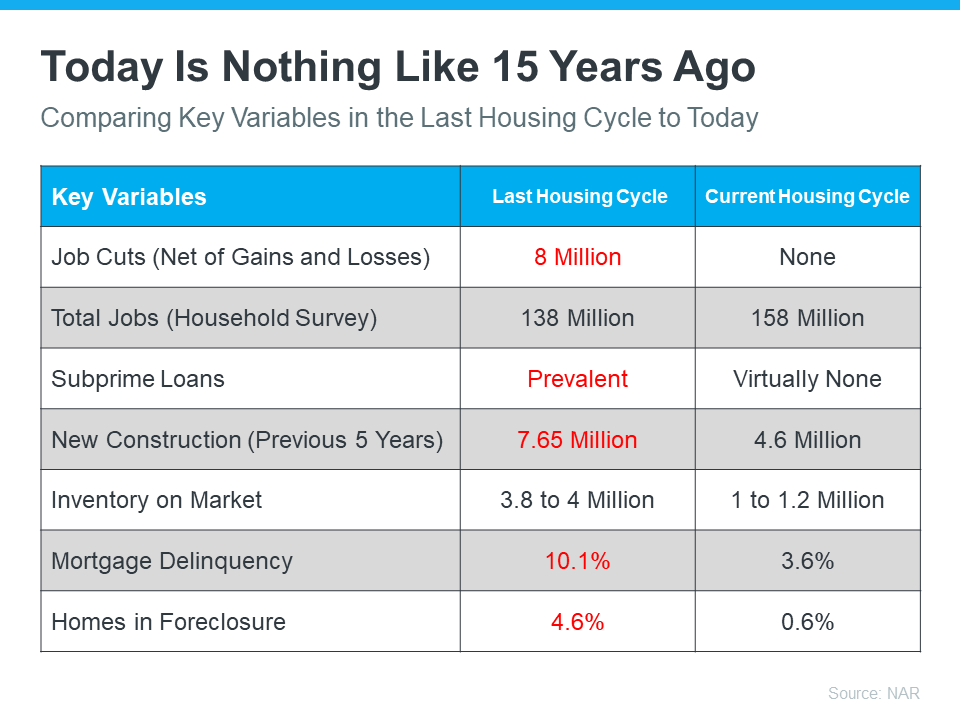
Looking at the facts, it’s clear: today is very different than the housing market of 15 years ago.
And in today’s market, with inventory rising and less competition from other buyers, there’s opportunity right now. According to David Stevens, former Assistant Secretary of Housing:
“So be advised…this may be the one and only window for the next few years to get into a buyer’s market. And remember…as the Federal Reserve data shows…home prices only go up and always recover from recessions no matter how mild or severe. Long term homeowners should view this market…right now…as a unique buying opportunity.”
Today’s housing market is nothing like the real estate market 15 years ago. If you’re a buyer right now, this may be the chance you’ve been waiting for.

Are you looking to buy a home? If so, we’ve got good news for you.
While there’s no denying the housing market is having a great year, many of the headlines are focused on the perks for sellers. But what about buyers today? As a buyer, you’re likely braving bidding wars and weighing low mortgage rates versus price appreciation as you search for your dream home. If you find yourself a bit discouraged, hear this: there are clear signs buyers may have more opportunities this fall.
According to realtor.com, the sweet spot for buyers is just around the corner. In a recent study, experts analyzed housing market trends by looking at data from the past several years. When applied to the current market, experts determined the ideal week to buy a home this year. The research says:
“Nationally, the best time to buy in 2021 is the week of October 3-9. This week historically has shown the best balance of market conditions that favor buyers.”
So, what’s that mean for you? If you’re looking to buy a home, there’s a golden window of opportunity coming. Here’s what you can expect from that week.
The number of homes available for sale should increase. According to realtor.com, you can expect to see more new listings come to market the week of October 3. The findings estimate we’ll see roughly 17.6% more homes available than we saw at the start of the year.
This means you’ll have more options to choose from which should be a welcome relief in a market with tight housing supply.
With more homes available, you should also see a slight decline in the number of bidding wars. Having more options means buyers may not be competing as intensely for the homes on the market because there are more choices to go around.
This means when you write an offer, you may have less competition and a better chance of being the top bid. Just remember, it’s still important to come in with a strong offer.
As we move into the end of the year, the findings from realtor.com note this week may also be one of the peak weeks for price reductions in 2021. Historically the data shows an average of 7.0% of homes have a price reduction that week. Why? When housing supply ticks up, sellers need to look for other ways to make their house stand out.
This means, while home prices are still appreciating overall, you may see some homes with price adjustments from eager sellers. The process of closing a house takes time. To close before end of year, sellers may be more motivated this October.
If you’re in the market for a home, don’t lose steam now. Data shows early October may give you the long-awaited opportunity to find the home of your dreams. Let’s connect so you have a trusted ally and advisor to help keep you motivated so you can find the perfect home for you.
Carolina Living and Roby Robertson believes every family should feel confident when buying and selling a home.

Never pay 6% when selling your home, Speak with us first!:
There are many benefits to working with a real estate professional when selling your house. During challenging times, like what we face today, it becomes even more important to have an expert you trust to help guide you through the process. If you’re considering selling on your own, known in the industry as a For Sale By Owner (FSBO), it’s critical to consider the following items.
Your safety should always come first, and that’s more crucial than ever given the current health situation in our country. When you FSBO, it is incredibly difficult to control entry into your home. A real estate professional will have the proper protocols in place to protect not only your belongings but your health and well-being too. From regulating the number of people in your home at one time to ensuring proper sanitization during and after a showing, and even facilitating virtual tours, real estate professionals are equipped to follow the latest industry standards recommended by the National Association of Realtors (NAR) to help protect you and your potential buyers.
Recent studies from NAR have shown that, even before COVID-19, the first step 43% of all buyers took when looking for a home was to search online. Throughout the process, that number jumps to 97%. Today, those numbers have grown exponentially. Most real estate agents have developed a strong Internet and social media strategy to promote the sale of your house.
Here are just a few of the people you’ll need to negotiate with if you decide to FSBO:
As part of their training, agents are taught how to negotiate every aspect of the real estate transaction and how to mediate the emotions felt by buyers looking to make what is probably the largest purchase of their lives.
Having a buyer who wants to purchase your house is the first step. Making sure they can afford to buy it is just as important. As a FSBO, it’s almost impossible to be involved in the mortgage process of your buyer. A real estate professional is trained to ask the appropriate questions and, in most cases, will be intimately aware of the progress being made toward a purchaser’s mortgage commitment. You need someone who’s working with lenders every day to guarantee your buyer makes it to the closing table.
The documentation involved in the selling process is growing dramatically as more and more disclosures and regulations become mandatory. In an increasingly litigious society, the agent acts as a third-party to help the seller avoid legal jeopardy. This is one of the major reasons why the percentage of people FSBOing has dropped from 19% to 8% over the last 20+ years.
Many homeowners think they’ll save the real estate commission by selling on their own. Realize that the main reason buyers look at FSBOs is because they also believe they can save the real estate agent’s commission. The seller and buyer can’t both save on the commission.
A study by Collateral Analytics revealed that FSBOs don’t actually save anything by forgoing the help of an agent. In some cases, the seller may even net less money from the sale. The study found the difference in price between a FSBO and an agent-listed home was an average of 6%. One of the main reasons for the price difference is effective exposure:
“Properties listed with a broker that is a member of the local MLS will be listed online with all other participating broker websites, marketing the home to a much larger buyer population. And those MLS properties generally offer compensation to agents who represent buyers, incentivizing them to show and sell the property and again potentially enlarging the buyer pool.”
The more buyers that view a home, the greater the chance a bidding war will take place, potentially driving the price higher, too.
Listing on your own leaves you to manage the entire transaction by yourself. Why do that when you can hire an agent and still net the same amount of money? Before you decide to take on the challenge of selling your house alone, let’s connect to discuss your options.

In the second half of this year, the housing market surged with activity. Today, real estate experts are looking ahead to the winter season and the forecast is anything but chilly. As Lawrence Yun, Chief Economist for the National Association of Realtors (NAR), notes:
“It will be one of the best winter sales years ever.”
The typical winter slowdown in the housing market is simply not on the radar. Here’s why.
While today’s historically low mortgage rates are expected to remain low, they won’t be this low for much longer. This could be the last chance for homebuyers to secure such low rates, and they’re ready to take action. In a recent article, Bankrate explained:
“If you’re looking to buy a home…expect mortgage rates to remain low into 2021. However, the possibility of rates falling to 2.5 percent or lower has faded as the U.S. economy has rebounded.”
As long as we continue to see low interest rates, we’ll see hopeful buyers on the hunt for their dream homes. Yun confirmed:
“The demand for home buying remains super strong…And we're still likely to end the year with more homes sold overall in 2020 than in 2019…With persistent low mortgage rates and some degree of a continuing jobs recovery, more contract signings are expected in the near future.”
The challenge, however, is the lack of homes available for sale. With that in mind, all eyes are on homeowners to see if they’ll sell this winter or wait until spring. Danielle Hale, Chief Economist for realtor.com, says it’s best for sellers to capitalize on this moment sooner rather than later:
“We currently see buyers sticking around in the housing market much later than we usually do this fall. If that trend continues, we will see more buyers in the market this winter, too. So, this winter is likely to be a good time to sell.”
With buyers ready to stay active this winter, sellers who want to close a deal on the best possible terms shouldn’t wait until spring to put their homes on the market.
Experts agree the winter housing market could potentially be bigger than ever. Whether you’re ready to buy or sell, let’s connect today so you can be in your dream home by the new year.

One of the biggest misconceptions for first-time homebuyers is how much you’ll need to save for a down payment. Contrary to popular belief, you don’t always have to put 20% down to buy a house. Here’s how it breaks down.
A recent survey by Point2Homes mentions that 74% of millennials (ages 25-40) say they’re interested in purchasing a home over the next 12 months. The study notes, “88% say they have significantly less savings than the average national down payment amount, which is $62,600.”
Thankfully, $62,600 is not the amount every buyer needs for a down payment in the United States. There are many different options available, especially for first-time homebuyers (millennial or not). That amount can also be significantly less, depending on the purchase price of the house.
According to the National Association of Realtors (NAR), “The median existing-home price for all housing types in August was $310,600.” (These are the latest numbers available). NAR also indicates that:
“In 2019, the median down payment was 12 percent for all buyers, six percent for first-time buyers, and 16 percent for repeat buyers.” (See graph below):
 That means if a qualified first-time buyer purchases a home at today’s median price, $310,600, with a 6% down payment, in reality, the down payment only amounts to $18,636. That’s nowhere near $62,600.
Knowing there are also programs like FHA where the down payment can be as low as 3.5% of the purchase price for a first-time buyer, that up-front cost could be significantly less – as little as $10,871 for the same home noted above. There are also other programs like USDA and loans for Veterans that waive down payment requirements.
The Point2Homes study also shares how much millennials have indicated they’ve saved for a down payment. As we can see in the graph below, 39% have already saved enough for a down payment on a median-priced home. Another 47% are close to reaching that goal, depending on the purchase price of the home. Unfortunately, the lack of knowledge about the homebuying process is keeping many motivated first-time buyers on the sidelines. That’s why it’s important to contact a local real estate professional to understand the requirements in your local area if you want to buy a home. A trusted agent and your lender can guide you through the process.
Be careful not to let big myths about homebuying keep you and your family out of the housing market. Let’s connect to discuss your options today.
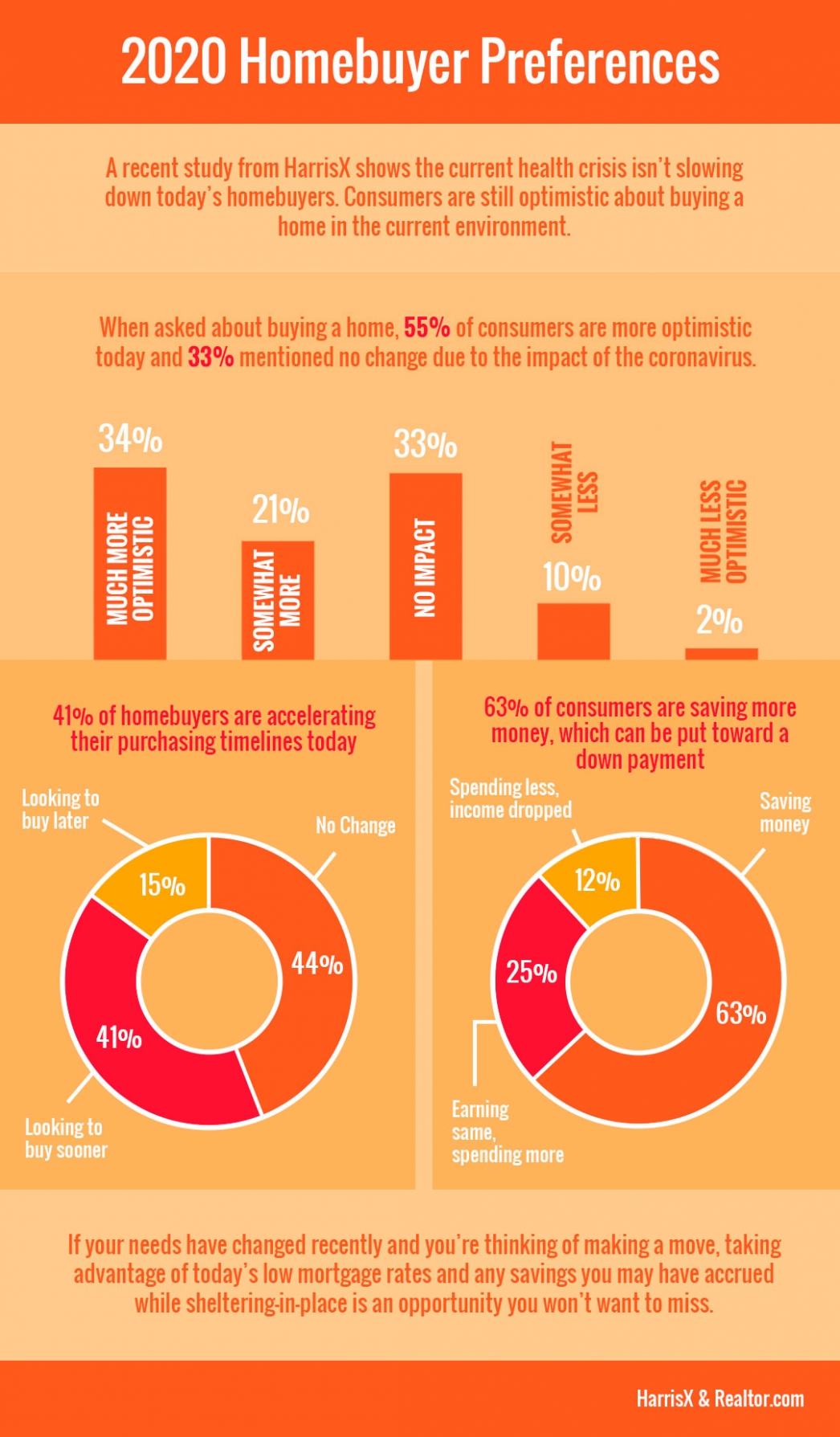
2020 Homebuyer Preferences

In today’s housing market, it can be a big challenge for buyers to find homes to purchase, as the number of houses for sale is far below the current demand. Now, however, we’re seeing sellers slowly starting to come back into the market, a bright spark for potential buyers. Javier Vivas, Director of Economic Research at realtor.com, explains:
“Seller confidence has been improving gradually after reaching its bottom in mid-April, and now it appears to have reached an important recovery milestone…After five long months, sellers are back in the housing market; while encouraging, the improvement to new listings is only the first step in the long road to solving low inventory issues keeping many buyers at bay."
Even with the number of homes coming into the market, the available inventory is well below where it needs to be to satisfy buyer interest. The National Association of Realtors (NAR) reports:
“Total housing inventory at the end of June totaled 1.57 million units, up 1.3% from May, but still down 18.2% from one year ago (1.92 million). Unsold inventory sits at a 4.0-month supply at the current sales pace, down from both 4.8 months in May and from the 4.3-month figure recorded in June 2019.”
Houses today are selling faster than they’re coming to market. That’s why we only have inventory for 4 months at the current sales pace when in reality we need inventory for 6 months to keep up. But, as mentioned above, sellers are starting to return to the game. Realtor.com explains:
“The ‘housing supply’ component – which tracks growth of new listings – reached 101.7, up 4.9 points over the prior week, finally reaching the January growth baseline. The big milestone in new listings growth comes as seller sentiment continues to build momentum…After constant gradual improvements since mid-April, seller confidence appears to be reaching an important milestone. The temporary boost in new listings comes as the summer season replaces the typical spring homebuying season. More homes are entering the market than typical for this time of the year.”
A good time to enter the housing market is when the competition in your area is low, meaning there are fewer sellers than interested buyers. You don’t want to wait for all of the other homeowners to list their houses before you do, providing more options for buyers to choose from. With sellers starting to get back into the market after five months of waiting, if you want to sell your house for the best possible price, now is a great time to do so.
It can be challenging to find a home in today’s low-inventory environment. If more sellers are starting to put their houses up for sale, there will be more homes for you to choose from, providing a better opportunity to find the home of your dreams while taking advantage of the affordability that comes with historically low mortgage rates.
While we still have a long way to go to catch up with the current demand, inventory is slowly starting to return to the market. If you’re thinking of moving this year, let’s connect today so you’re ready to make your move when the home of your dreams comes up for sale.

Every year, Gallup conducts a survey of Americans to determine their choice for the best long-term investment. Respondents are asked to select real estate, stocks/mutual funds, gold, savings accounts/CDs, or bonds.
For the seventh year in a row, real estate has come out on top as the best long-term investment. Gallup explained:
“Real estate remains the most favored investment to Americans, as has been the case since 2013, when the housing market was on the rebound. More than a third of Americans have named real estate as the top investment since 2016.”
This year’s results indicated 35% of Americans chose real estate, followed by stocks at 21%. The full results covering the last decade are shown in the chart below:
The belief of the American people in the stability of housing as a long-term investment remains strong, even through the many challenges our economy faces today.


“Historical analysis showed us that pandemics are usually V-shaped (sharp recessions that recover quickly enough to provide little damage to home prices), and some very cutting-edge search engine analysis by our Information Management team showed the current slowdown is playing out similarly thus far.”
“This is a planned, organized partial shutdown of the U.S. economy in the second quarter,” Bullard said. “The overall goal is to keep everyone, households and businesses, whole” with government support.
“I would see the third quarter as a transitional quarter” with the fourth quarter and first quarter next year as “quite robust” as Americans make up for lost spending. “Those quarters might be boom quarters,” he said.
